

Sneaker Lace Length Guide

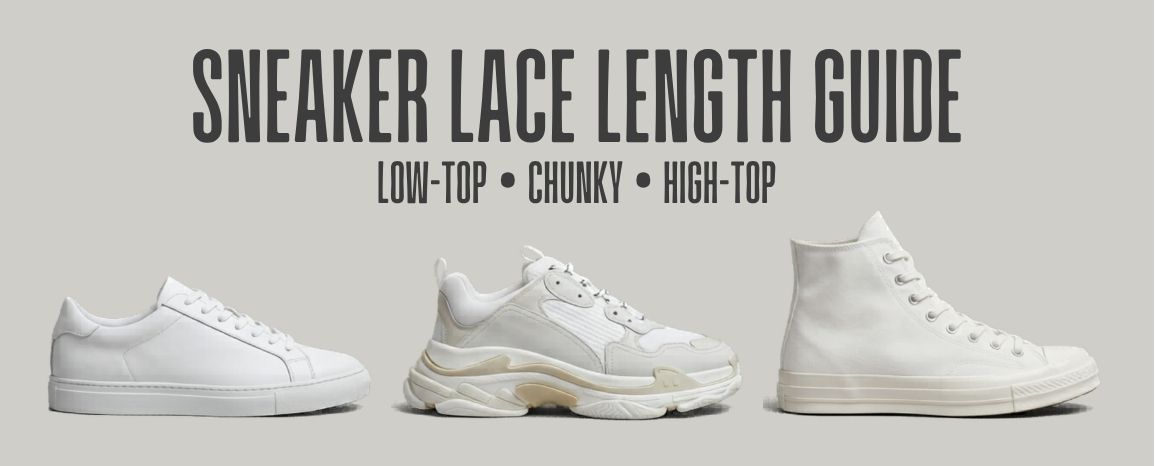
Low-top, chunky and high-top sneakers showing different lace length needs - Pear ShoelaceLow-top, chunky and high-top sneakers showing different lace length needs - Pear Shoelace

Sneaker Lace Length Guide

Find the right shoelace length for low-top sneakers, running shoes, chunky sneakers, basketball shoes and high-tops. Measure your original laces for the most accurate result or count the eyelet pairs on one shoe.

Do You Have the Original Laces?

Remove one lace, straighten it without stretching and measure it from tip to tip. If it tied comfortably, choose the closest available replacement length.

Are the Original Laces Missing?

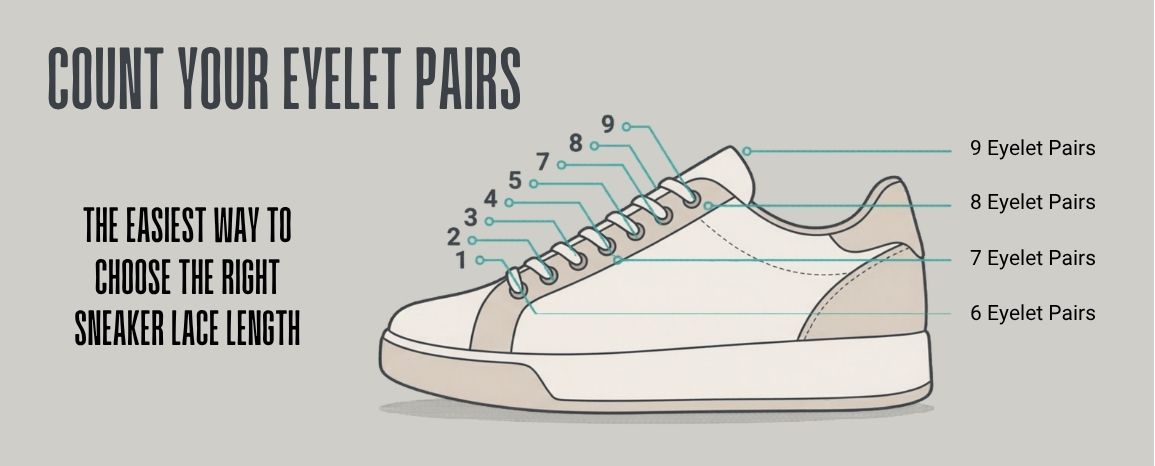
Count the matching eyelet pairs running up one sneaker. Use the sneaker lace length chart below to find a suitable starting length.

Important: count matching eyelet pairs on one sneaker, not every individual hole. Sneaker width, tongue thickness, eyelet spacing and lacing method can affect the required length.

Sneaker Lace Length Chart

Count the matching eyelet pairs on one sneaker and use this chart as a starting point. Measure the original lace whenever possible for the most accurate fit.

Eyelet Pairs Typical Sneaker Style Recommended Lace Length
3 to 4 pairs Kids’ or minimal low-top sneakers 60–80 cm
4 to 5 pairs Slim low-top sneakers 80–100 cm
5 to 6 pairs Standard low-top sneakers 100–120 cm
6 to 7 pairs Running or chunky sneakers 120–140 cm
7 to 8 pairs Mid-top or basketball sneakers 140–160 cm
8 to 9 pairs High-top sneakers 160–180 cm
9 to 10 pairs Tall or heavily padded high-tops 180–200 cm

Sizing note: choose the longer option for wide sneakers, thick tongues, widely spaced eyelets, runner’s-loop lacing or larger bows. Choose the shorter option for slim sneakers, loose lacing or an unused top eyelet.

Sneaker eyelet count diagram showing how to choose the right lace length - Pear ShoelaceSneaker eyelet count diagram showing how to choose the right lace length - Pear Shoelace
Sneaker eyelet count diagram showing how to choose the right lace length

How to Measure Sneaker Laces

Measuring an existing lace is the most reliable way to choose a replacement. Follow these steps before selecting your new sneaker lace length.

1

Remove One Lace

Carefully remove one original lace from the sneaker without stretching or damaging it.

2

Lay It Flat

Straighten the lace on a flat surface without pulling or stretching the material.

3

Measure Tip to Tip

Measure the complete lace from the end of one aglet to the end of the other.

4

Choose the Size

Select the closest available length and adjust it if the old lace was too short or too long.

Helpful tip: add approximately 10–20 cm if the original lace was difficult to tie. Choose a shorter length if it created oversized loops or long ends that hung over the sides.

How Sneaker Style Affects Lace Length

Sneakers with the same eyelet count may still need different lace lengths. Shoe height, width, tongue padding and lacing method all affect how much lace is required.

Low-Top Sneakers

Slim low-top sneakers generally have fewer eyelet pairs and need shorter laces. A shorter length creates a neat bow without oversized loops or dangling ends.

Running Shoes

Running shoes may need extra length when they have padded tongues, wide eyelet spacing or an additional top eyelet used for runner’s-loop lacing.

Chunky Sneakers

Chunky sneakers often have broad tongues and wider openings. The lace travels further across the shoe, so the longer option within the recommended range may fit better.

High-Top Sneakers

High-top and basketball sneakers usually have more eyelet pairs and require longer laces. Count every eyelet pair you intend to use before choosing a size.

Quick guide: choose more length for a secure athletic fit, wide lacing pattern or full use of the top eyelets. Choose less length for loose streetwear lacing or when leaving the top eyelet unused.

Choosing the Best Laces for Sneakers

Choose a shoelace shape, width and colour that suits the sneaker design as well as how securely you want the shoes to fit.

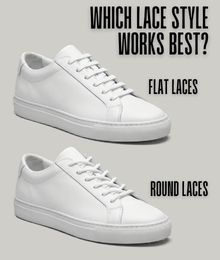
Flat Sneaker Laces

Flat laces are a versatile choice for low-tops, skate shoes, fashion sneakers and chunky styles. Their broad shape creates a familiar sneaker appearance.

Oval Sneaker Laces

Oval laces suit running shoes and sport-inspired sneakers. Their slightly rounded shape provides a secure feel and complements athletic footwear.

Round Sneaker Laces

Round laces can suit outdoor, hiking-inspired and selected fashion sneakers where a slimmer or more structured lace style is preferred.

Choose a Longer Lace When

Your sneakers are wide, heavily padded or high-top, or have extra eyelets. Extra length also helps with runner’s loops, tight lacing and larger bows.

Choose a Shorter Lace When

Your sneakers are slim low-tops, worn loosely or laced without using the top eyelet. A shorter lace provides a cleaner finish with less excess.

Style tip: matching laces create a clean, original-style appearance, while contrasting or patterned laces can add colour and personality to plain sneakers.

Comparison of flat laces and round laces on sneakers - Pear ShoelaceComparison of flat laces and round laces on sneakers - Pear Shoelace
Comparison of flat laces and round laces on sneakers

Find the Right Replacement Sneaker Laces

Once you know the correct length, choose replacement laces that suit your sneaker shape, eyelets and preferred fit. Pear Shoelace offers flat, oval and round options for everyday sneakers, running shoes, chunky styles and high-tops.

Check the length, shape, width and colour before ordering. Measuring an existing lace from tip to tip remains the most reliable way to find the right replacement.

Shop All Sneaker Laces

Lace-length recommendations are a general guide. Sneaker width, eyelet spacing, tongue thickness, lacing method and preferred bow size may affect the required length.

Finding the Right Lace Length for Sneakers by Pear Shoelace

Finding the Right Lace Length for Sneakers by Pear Shoelace

The best way to choose sneaker lace length is to count the eyelet pairs on one shoe first. From there, check the sneaker style, tongue thickness and how tightly you like to tie your shoes. Low-top sneakers usually need less length, while high-tops, wide sneakers, and padded shoes often need a longer lace to achieve a neat bow.

Most adult sneakers need laces between 120 cm and 160 cm. Slim low-top sneakers often suit 120cm laces, while chunkier everyday sneakers may need 140 cm or 160 cm. If your shoes have a padded tongue, wide spacing, or you like a fuller bow, choose the longer option within the recommended range.

Yes, 120cm laces are a good choice for many adult low-top sneakers. They usually work best on shoes with around 6 eyelet pairs and a standard fit. If your sneakers are wide, heavily padded, or tied through every top eyelet, 140cm may give a cleaner, more comfortable result.

Most high-top sneakers need 160 cm to 180 cm laces. The extra height means there are usually more eyelets to thread, so shorter laces can leave the bow too small or hard to tie. Choose 160cm for a neater fit, or 180cm if the sneaker is bulky, wide or tightly laced.

The easiest way to measure sneaker laces is to remove one lace and measure it end to end. Lay it flat without stretching it, then measure from one aglet tip to the other. If the old lace felt too long or too short, adjust the replacement length by 10 cm to 20 cm.

Choose shorter laces if you wear your sneakers loosely for a cleaner casual look. Loose lacing usually needs less length because the shoe is not pulled tightly across the tongue. If you still want a visible bow, avoid going too short, as the lace ends may become hard to tie.

Kids sneakers usually need shorter laces, typically 60- 90 cm. Toddler shoes may fit 20 cm to 60 cm, while older kids’ sneakers often fall in the 75 cm to 90 cm range. The safest method is still to count the eyelet pairs and, where possible, compare the old lace length.

Yes, wide sneakers often need longer shoelaces than slim sneakers with the same number of eyelets. Extra width means the lace travels farther across the shoe before reaching the next eyelet. A high instep, padded tongue or chunky sneaker shape can also add to the length needed.

Flat laces are usually the most common choice for sneakers. They sit neatly across the tongue and suit casual sneakers, fashion sneakers, skate shoes and many everyday trainers. Round laces can still work on some athletic or outdoor-inspired sneakers, but the right choice depends on the shoe’s eyelet shape and original lace style.

Yes, lace colour can change the whole look of your sneakers. Matching laces give a clean, simple finish, while contrasting colours make the shoe stand out. White, black, grey and cream are safe everyday options, while brighter colours work well when you want a more personalised sneaker style.

Sneaker laces should be removed from the shoes and cleaned gently when they look dirty. Hand wash them in mild soapy water, rinse well and let them air dry before relacing. Avoid high heat, harsh scrubbing, and tumble drying, as these can damage the fibres or cause the aglets to wear faster.

Choosing the right sneaker lace length comes down to eyelet count, shoe shape and how firmly you like your shoes to fit. Low-top sneakers usually need less lace than high-tops, while chunkier styles and performance shoes often need a little more length. If you are ready to shop, explore our Flat Shoelaces for everyday sneakers and fashion styles, or browse our Round Shoelaces for a different finish. You can also compare other footwear guides in our Casual Shoe Lace Length Guide, Dress Shoe Lace Length Guide and Boot Lace Length Guide.

Loading...
Loading...
loader
Loading...