
Dress Shoe Lace Length Guide

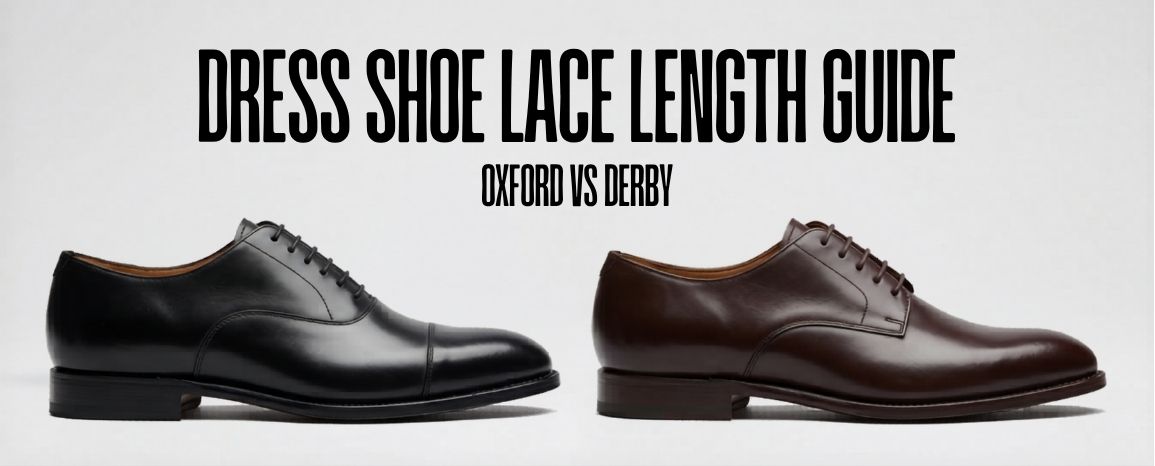
Oxford and Derby dress shoes showing different lace length needs - Pear ShoelaceOxford and Derby dress shoes showing different lace length needs - Pear Shoelace

Dress Shoe Lace Length Guide

Find the right shoelace length for Oxford shoes, Derby shoes, business shoes and other formal footwear. Measure your existing laces for the most accurate result or count the eyelet pairs on one shoe.

Do You Have the Original Laces?

Remove one lace, straighten it without stretching and measure it from tip to tip. If it created a neat, balanced bow, choose the closest available replacement length.

Are the Original Laces Missing?

Count the matching eyelet pairs on one shoe. Use the dress shoe lace length chart below to find a suitable starting length for your replacement laces.

Important: count matching eyelet pairs on one shoe, not every individual hole. Shoe width, eyelet spacing and lacing method can affect the required length.

Dress Shoe Lace Length Chart

Count the matching eyelet pairs on one shoe, then use this chart as a starting point. Measure the original lace whenever possible for the most accurate fit.

Eyelet Pairs Typical Dress Shoe Style Recommended Lace Length
2 pairs Low-cut formal shoes 45–60 cm
3 pairs Compact Oxfords or formal shoes 60–75 cm
4 pairs Standard Oxford or Derby shoes 75–90 cm
5 pairs Business shoes or wider Derbies 90–100 cm
6 pairs Large or open-laced formal shoes 100–120 cm

Sizing note: choose the longer option for Derby shoes, wider eyelet spacing, a high instep or criss-cross lacing. Choose the shorter option for compact Oxfords, closely spaced eyelets or straight-bar lacing.

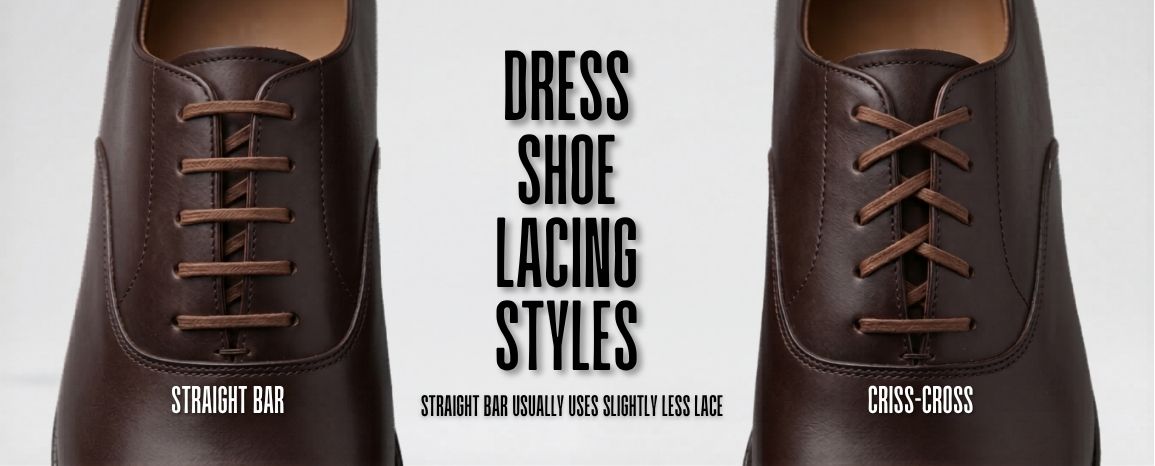
Straight bar lacing and criss-cross lacing on dress shoes - Pear ShoelaceStraight bar lacing and criss-cross lacing on dress shoes - Pear Shoelace

How to Measure Dress Shoe Laces

Measuring an existing lace is the most accurate way to choose a replacement. Follow these steps to find the right length while maintaining a neat, balanced bow.

1

Remove One Lace

Carefully remove one existing lace from the shoe without stretching or damaging it.

2

Lay It Flat

Straighten the lace on a flat surface without pulling or stretching the material.

3

Measure Tip to Tip

Measure the entire lace from the end of one aglet to the end of the other aglet.

4

Check the Bow Size

Choose the closest available length and adjust it if the original bow looked too large or was difficult to tie.

Helpful tip: dress shoe laces should create a small, balanced bow without long loops or dangling ends. If the original lace was unsuitable, adjust the replacement length by approximately 10–15 cm.

How Shoe Style and Lacing Affect Lace Length

Two dress shoes with the same number of eyelet pairs may need different lace lengths. The shoe’s opening, eyelet spacing and lacing method all affect how much lace is required.

Oxford Shoes

Oxford shoes have a closed lacing system with the eyelet sections attached beneath the front of the shoe. Their compact opening and closely spaced eyelets often suit shorter laces with a small, refined bow.

Derby Shoes

Derby shoes have an open lacing system with eyelet sections positioned above the front of the shoe. The wider opening may require slightly longer laces, particularly for a high instep or wider foot.

Straight-Bar Lacing

Straight-bar lacing creates clean horizontal lines across the shoe and is a traditional choice for formal footwear. It can use less lace than some criss-cross patterns, so a shorter length may provide a tidier finish.

Criss-Cross Lacing

Criss-cross lacing travels diagonally between the eyelets and may use slightly more lace. Choose the longer option within the recommended range if the shoe is wide or the eyelets are spaced further apart.

Quick guide: compact Oxford shoes with straight-bar lacing generally suit the shorter end of the recommended range. Wider Derby shoes with criss-cross lacing generally suit the longer end.

Choosing the Best Laces for Dress Shoes

Dress shoe laces should complement the clean shape and polished appearance of formal footwear. Consider the lace shape, material, thickness and colour as well as the length.

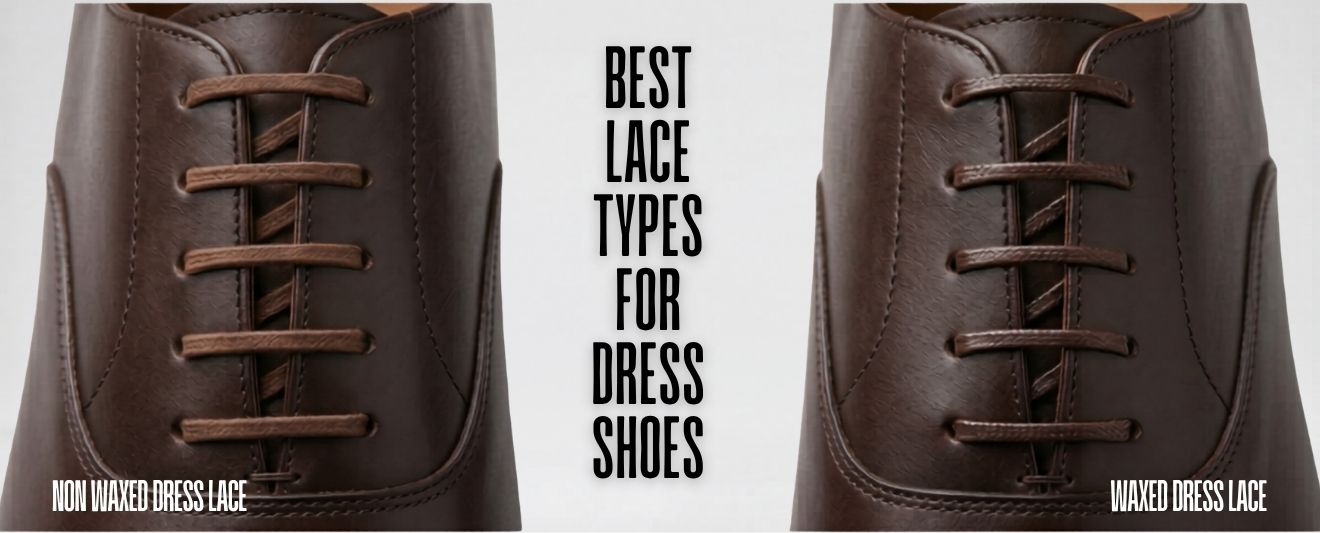
Round Waxed Dress Laces

Round waxed laces offer a slim, polished appearance that suits Oxford shoes, Derby shoes, business shoes and formal leather footwear. Their smooth finish sits neatly through small dress shoe eyelets.

Flat Waxed Dress Laces

Flat waxed laces provide a slightly wider and more noticeable finish. They can suit selected Derby shoes, brogues and less formal leather shoes where a broader lace complements the design.

Choose a Longer Lace When

Your shoes have more eyelet pairs, widely spaced eyelets, an open Derby-style lacing system or extra width across the instep. A longer lace is also useful for criss-cross lacing or a slightly larger bow.

Choose a Shorter Lace When

Your shoes have fewer or closely spaced eyelets, a compact Oxford-style opening or straight-bar lacing. A shorter lace can create a sharper formal finish with smaller loops and less excess lace.

Colour tip: match black laces with black dress shoes and brown laces with similar brown tones for a traditional appearance. A slightly darker lace generally looks more formal than a lighter or strongly contrasting colour.

Comparison of round and waxed laces on dress shoes - Pear ShoelaceComparison of round and waxed laces on dress shoes - Pear Shoelace

Find the Right Replacement Dress Shoe Laces

Once you know the correct length, choose replacement laces that complement the shape, colour and finish of your footwear. Pear Shoelace offers options for Oxford shoes, Derby shoes, business shoes and other formal lace-up styles.

Check the length, shape, thickness and colour before ordering. Measuring an existing lace from tip to tip remains the most reliable way to achieve a clean fit and balanced bow.

Shop All Dress Shoe Laces

Lace-length recommendations are a general guide. Shoe width, eyelet spacing, lacing method and preferred bow size may affect the required length.

Finding the Right Lace Length for Dress Shoes by Pear Shoelace

Finding the Right Lace Length for Dress Shoes by Pear Shoelace

The easiest way to find the right dress shoe lace length is to count the eyelet pairs on one shoe. Dress shoes commonly use shorter, cleaner laces than sneakers because the eyelets sit closer together. If your old laces are tied neatly with a balanced bow, measuring them is usually the most accurate way to go.

Yes, measuring your old dress shoe laces is the most reliable starting point. Remove one lace, pull it straight without stretching it, and measure from tip to tip. If the bow was too long or too short, adjust the replacement length by one size rather than guessing a completely different length.

You should count the eyelet pairs on one shoe, not the total holes across both shoes. For example, if one side has five holes and the other side has five holes, that is five eyelet pairs. Dress shoes with more eyelet pairs usually need longer laces, but shoe width and lacing style can also change the ideal length.

Most lace-up dress shoes suit a neat, medium-length lace that leaves enough room for a small bow. The exact length depends on whether the shoe has three, four, five or six eyelet pairs. A good dress shoe fit should feel secure without leaving long lace ends hanging over the sides.

Round laces are often the best choice for dress shoes because they look clean, refined and easy to tie. They sit neatly through small eyelets and suit leather shoes, office shoes and formal footwear. Flat laces can work on some casual dress shoes, but round laces usually give the most classic finish.

The safest choice is to match your lace colour closely to your dress shoes. Black laces suit black leather shoes, while brown, tan or dark brown laces usually work best with brown footwear. If you want a sharper look, choose a slightly darker lace rather than a lighter one, as it often looks cleaner and more formal.

Your dress shoe laces usually look too long because the lace length does not match the eyelet count or the shoe’s narrow spacing. Dress shoes often need fewer laces than casual sneakers with the same number of eyelets. A shorter replacement lace can help create a neater bow and stop the ends from dragging or sitting unevenly.

Your dress shoe laces may feel too short if the shoe has wider spacing, thicker leather or a lacing style that uses more length. Straight-bar lacing and wider openings may require a little extra lace than a tight criss-cross pattern. Choose the next length up if the bow feels hard to tie or comes undone too easily.

Waxed cotton and smooth round polyester are both good choices for dress shoes. Waxed laces offer a polished look and can hold a tidy knot well, while polyester laces are durable and easy to maintain. For formal leather shoes, avoid bulky laces that make the eyelet area look crowded.

You should keep dress shoe laces clean, dry and free from heavy wax or polish build-up. Remove the laces before cleaning or polishing your shoes to prevent stains from being absorbed. If the tips are cracked, the colour has faded, or the lace no longer ties securely, it is time to replace them.

Yes, Pear Shoelace dress shoe laces ship across Australia from Sydney. This makes it easy to order replacement laces for work shoes, formal shoes, school dress shoes, or special-occasion footwear. Choosing the right length before ordering helps your shoes look cleaner and feel more comfortable when they arrive.

Dress shoes look best when the laces are clean, proportionate, and suited to the shoe's style. Oxfords usually suit slightly shorter laces, while Derbies often need a little more length because of their more open lacing system. For a polished formal finish, shop our Round Shoelaces and Waxed Shoelaces. You can also compare other footwear categories in our Sneaker Lace Length Guide, Casual Shoe Lace Length Guide and Boot Lace Length Guide.

Loading...
Loading...
loader
Loading...