
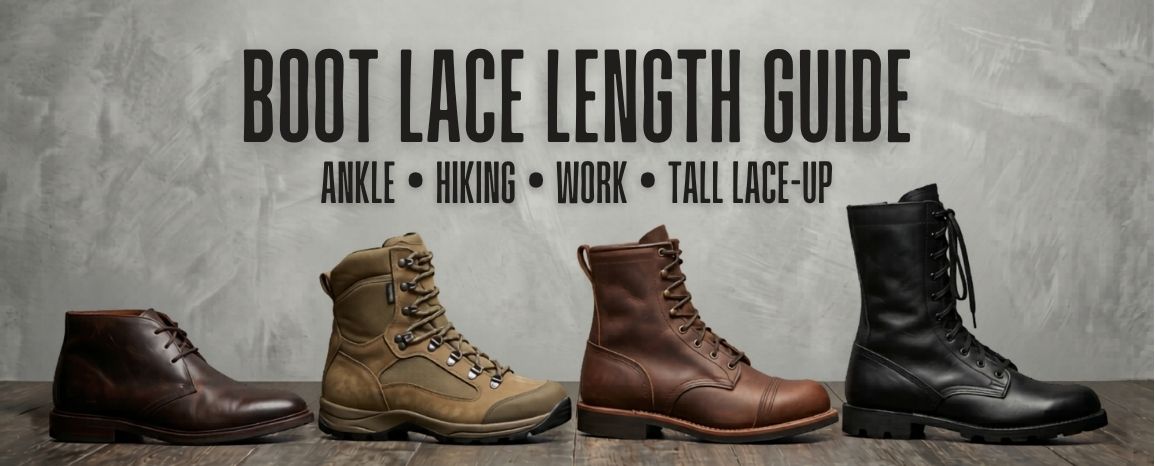
Ankle boots, hiking boots and work boots showing different lace length needs - Pear ShoelaceAnkle boots, hiking boots and work boots showing different lace length needs - Pear Shoelace

Find the Right Lace Length for Boots

Find the Right Lace Length for Boots

Choosing the right boot lace length matters more than many people realise. Boots usually need longer laces than other types of footwear because they cover more of the foot and ankle, often have more eyelets, and may also include hooks or speed hooks. If the laces are too short, the boots can be hard to tighten and frustrating to tie. If they are too long, they can look untidy, catch on the ground or require constant double-knotting.

Most ankle boots use 100 cm to 140 cm laces. Most hiking boots and work boots use 140 cm to 180 cm laces. Most tall lace-up boots use 180 cm to 220 cm laces. Kids boots usually sit lower in the range, often from 70 cm to 120 cm. The most accurate way to choose the right size is to count the number of eyelet pairs or hooks on the boot.

Boots place more demand on laces than most other shoes. In many styles, the lacing system affects comfort, ankle support, stability and how easy the boots are to put on and take off. That is why choosing the right replacement boot laces is so important.

Boot Lace Length Chart

Sneaker Type / Eyelet CountRecommended Shoelace Length
Boot Type / Eyelet Pairs or HooksRecommended Lace Length
Small kids boots70 cm to 90 cm
Standard kids boots90 cm to 100 cm
Older kids boots100 cm to 120 cm
6 to 7 eyelet pairs / casual boots120 cm to 140 cm
7 to 8 eyelet pairs / light hiking or work boots140 cm to 160 cm
8 to 9 eyelet pairs/hiking boots160 cm to 180 cm
9 to 10 eyelet pairs / taller work boots180 cm to 200 cm
10 to 12 eyelet pairs / tall lace-up boots200 cm to 220 cm

For this page, the strongest supporting sizes are 100cm laces, 120cm laces, 140cm laces, 160cm laces, 180cm laces, 200cm laces and 220cm laces, alongside your Boot Laces, Round Shoelaces and Waxed Laces collections.

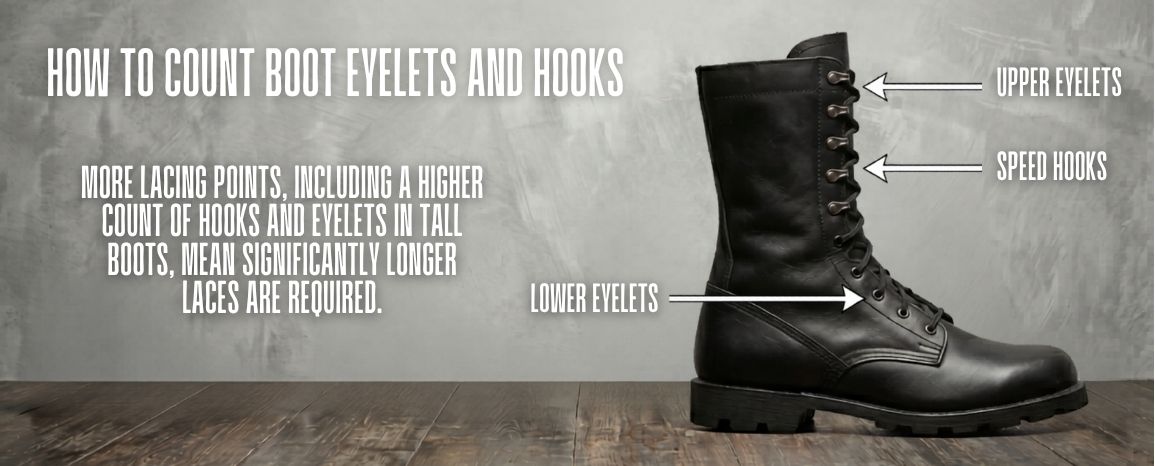
Boot diagram showing eyelets and speed hooks for measuring lace length - Pear ShoelaceBoot diagram showing eyelets and speed hooks for measuring lace length - Pear Shoelace

How to Choose the Right Boot Lace Length

The best boot lace length depends on the boot's height, the number of eyelets and hooks, and how tightly the boot needs to be worn.

A low ankle boot needs much less lace than a tall hiking boot or lace-up work boot. More fastening points usually mean more lace is needed. Hooks and speed hooks can further increase the lace path. A fashion boot may need less lace than a work boot because it is often worn more loosely and places less strain on the lacing system.

If you want the most reliable fit, count the eyelet pairs or hooks first, then compare your result with the chart above.

Boot Lace Sizes From Kids to Adults

Small kids boots often suit 70 cm to 90 cm laces. Standard kids’ lace-up boots often use 90 cm to 100 cm laces, while older kids’ boots may need 100 cm to 120 cm.

Youth boots often suit 120cm laces or 140cm laces, depending on whether they are fashion boots or more structured styles.

Adult ankle boots often suit 100 cm laces or 120 cm laces. Casual boots often suit 120 cm laces or 140 cm laces. Many hiking boots and work boots suit 140 cm laces, 160 cm laces or 180cm laces, depending on height, eyelets and hooks. Tall lace-up boots often suit 200 cm laces or 220 cm laces.

Best Lace Type for Boots

Boots work best with Boot Laces, Round Shoelaces, or Waxed Shoelaces, depending on the boot style.

Round laces are a practical option for many everyday, hiking, and work boots. Waxed laces are a strong choice for leather boots and styles that call for a cleaner, smarter finish. Purpose-made boot laces are often the best option where durability matters most.

Because boots place more stress on laces than ordinary shoes, it is important to choose laces that suit both the length and the demands of the boot.

When to Choose a Longer Boot Lace

Choose the longer option if the boot has speed hooks, is used for hiking or work, has a tall upper, is worn with thick socks, needs a secure fit, or uses tighter, support-focused lacing.

When to Choose a Shorter Boot Lace

Choose the shorter option if the boot is a low ankle style, has compact eyelet spacing, is fashion-focused rather than functional, or is intended to have a smaller bow with less visible lace.

Common Boot Lace Lengths

100cm laces are best for compact ankle boots and smaller lace-up boots.

120cm laces are a common choice for ankle boots and casual boots.

140cm laces work well for casual boots, some work boots and lighter hiking boots.

160cm laces are ideal for many hiking boots and standard work boots.

180cm laces are best for taller hiking boots and larger work boots.

200cm laces suit tall work boots and larger lace-up boot styles.

220cm laces are best for tall boots with many eyelets or hooks.

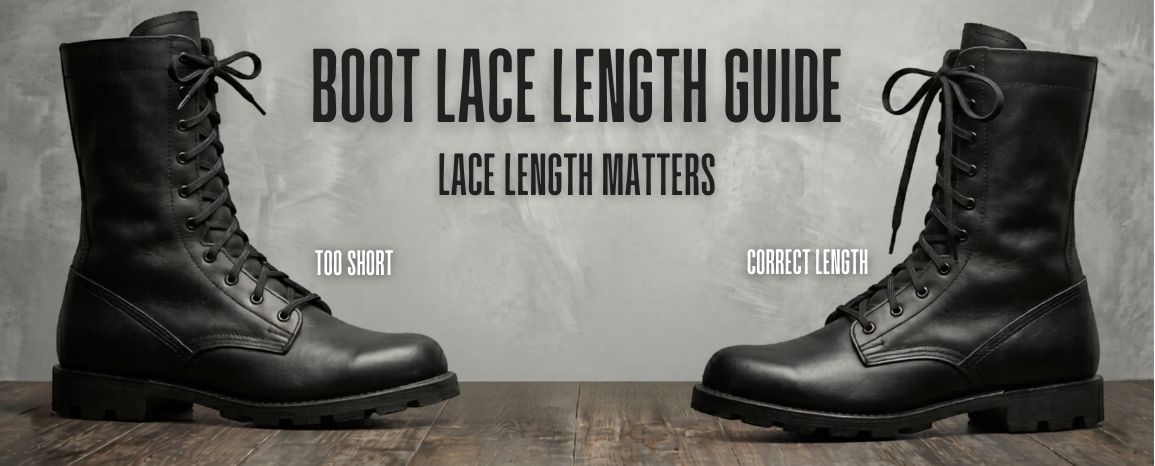
Comparison of boot laces that are too short and the correct lace length - Pear ShoelaceComparison of boot laces that are too short and the correct lace length - Pear Shoelace

Boots ask more from their laces than almost any other footwear. Whether you need replacement boot laces for ankle boots, hiking boots, work boots or tall lace-up styles, Pear Shoelace has the right lengths and materials to help you get the fit right.

Finding the Right Lace Length for Boots by Pear Shoelace

Finding the Right Lace Length for Boots by Pear Shoelace

The best way to find the right boot lace length is to measure your current laces from end to end. If the old laces tied well, use that measurement as your guide. If they are too short or too long, adjust by 10 – 20cm depending on how much extra lace you need for a comfortable bow.

Yes, counting the eyelet pairs is a useful way to estimate the length of boot laces. Count the pairs of holes or hooks on one boot, then match that number to a lace length guide. This works well when your old laces are missing, but measuring an existing lace is still the most accurate option.

Most ankle boots usually need shorter laces than tall work or hiking boots. The right length depends on the number of eyelets, the width of the boot opening, and how you like to tie them. As a rule, low ankle boots often need fewer laces, while padded or wider boots may need extra length.

Hiking boots usually need longer laces because they often have more eyelets, hooks, or speed-lacing sections. A longer lace gives enough room to tighten the boot evenly from the toe area to the ankle. If you use a heel lock or a double knot, choose a slightly longer length to make tying easier.

Yes, choose slightly longer boot laces if you regularly double-knot your boots. A double knot requires more lace than a standard bow, especially on work, hiking, and kids’ boots. If your current laces feel tight when tied, adding around 10–20cm can make the fit easier to manage.

Boot laces that are too short can make your boots harder to tighten and uncomfortable to tie. You may end up with a small bow, uneven tension, or not enough lace to use the top hooks. For boots, it is usually better to have a little extra length than to be short.

Boot laces that are too long can drag, loosen, or create bulky bows. This can be annoying for everyday wear and may be unsafe for work, hiking, or outdoor use. If the laces hang too far past the boot, choose a shorter length or use a firmer knot to keep them controlled.

Polyester, cotton, waxed, and round rope-style laces can all work well for everyday boots. Polyester is a practical choice for regular wear, while waxed laces give a firmer, cleaner look. For heavier boots, choose a lace that feels strong enough for repeated tightening and that matches the boot's style.

Yes, boot lace colour can change the overall look of your boots quite a lot. Matching colours create a clean, simple finish, while contrasting colours can make the laces stand out. Black, brown, tan, navy, and grey are easy everyday options, while brighter colours suit a more casual or custom look.

You can help boot laces last longer by keeping them clean, dry, and properly tied. Remove loose dirt with a soft cloth or a gentle brush, and let wet laces air-dry before wearing them again. Avoid pulling too hard on worn aglets or frayed sections, as this can shorten the lace's lifespan.

Boots usually need longer laces because they are taller, have more eyelets and, in many cases, hooks or speed hooks. The right boot lace should let you tighten the boot properly, tie it securely, and meet the demands of everyday wear, work, or outdoor use. To find the best options for ankle boots, hiking boots, work boots and tall lace-up styles, shop our Boot Laces, Round Shoelaces and Waxed Shoelaces. For other footwear categories, visit our Sneaker Lace Length Guide, Casual Shoe Lace Length Guide and Dress Shoe Lace Length Guide.

Loading...
Loading...
loader
Loading...